Abbi was asked to give a short talk introducing home education, at a seminar titled 'Rethinking Education'. Interestingly it was held at a school and the audience consisted of teachers and educators representing various schools. Though the talk was short it presented an alternative to conventional means of education. (Jazakullah Khair Umm Ayman for providing the slides) Enjoy!
Saturday, July 13, 2013

Thursday, November 15, 2012
Innovative Investigations: Block and Tackle
DATE: 22 Zilhijjah 1433/8 Nov. 2012
 |
| Block and Tackle |
AIM:
To build a simple block and tackle and a pulley with hangers and investigate how they work and which is easiest.
MATERIALS:
- 3 coat hangers
- plasticine
- tape
- scissors
- pencil
- paper cups
METHOD:
First we used the paper cup and yarn to make a bucket to hold our load.
Then we made the Block and Tackle with two hangers, some yarn and tape; we tied one end of the yarn to one hanger and taped it in place. Then we wound the yarn around both hangers and held on the the other end of the yarn to pull. The bucket was attached to the lower hanger.
The second pulley was made by attaching the bucket to one end of the yarn and looping the other end over the curve of the hanger.
RESULTS:
OBSERVATIONS:
1.Which pulley system worked better?
The simple pulley.
2.Why?
It could be pulled more easily.
3. Did both pulleys need the same amount of force to work?
No, the block and tackle needed more force to move (it was difficult to use too).
4. Which needed more force?
The Block and Tackle.
5.Why did it need more force to lift the load?
The yarn had to move over more distance to work and had to the lower hanger as well.
(Design of Block and Tackle taken from :Wheels, Pulleys and Levers" pulished by Pustak Mahal, India)
To build a simple block and tackle and a pulley with hangers and investigate how they work and which is easiest.
 |
| load; plasticine |
- 3 coat hangers
- plasticine
- tape
- scissors
- pencil
- paper cups
METHOD:
 |
| cup holding load |
Then we made the Block and Tackle with two hangers, some yarn and tape; we tied one end of the yarn to one hanger and taped it in place. Then we wound the yarn around both hangers and held on the the other end of the yarn to pull. The bucket was attached to the lower hanger.
The second pulley was made by attaching the bucket to one end of the yarn and looping the other end over the curve of the hanger.
RESULTS:
 |
| Block and tackle in action |
 |
| load up |
 |
| simple system pulley using a hanger |
OBSERVATIONS:
1.Which pulley system worked better?
The simple pulley.
2.Why?
It could be pulled more easily.
3. Did both pulleys need the same amount of force to work?
No, the block and tackle needed more force to move (it was difficult to use too).
4. Which needed more force?
The Block and Tackle.
5.Why did it need more force to lift the load?
The yarn had to move over more distance to work and had to the lower hanger as well.
(Design of Block and Tackle taken from :Wheels, Pulleys and Levers" pulished by Pustak Mahal, India)
Friday, November 9, 2012
Masha'Allah Moments
Things are constantly changing around us; the weather gets cooler, the days get shorter, the children get taller or rounder- we take many of these changes for granted and some seem mundane, other things happen in a blink of an eye, so if your nodding off you'll miss it. As we keep plodding through our days, things will happen to give us a "heads up!" so here are a few more recent things from our home:
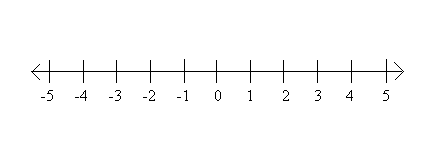 - IBAP (11 yrs) was doing math on Khan Academy - we're revising multiplication and division, when I found him adding and subtracting negative numbers. This was a surprise because we haven't begun that topic yet and he was getting the answers right. I asked him if he had watched a tutorial on it, he explained he hadn't, and when he first attempted the set of questions he got them all wrong. So how did he figure them out now? He was forming a number-line in his mind and moving "left" and "right" on it ; 9- (-4) = 5!
 -SBAP (4yrs) can now back flip onto the bed Subhan'Allah, he is now trying to land on his feet. He has also begun horse riding lessons, accompanying QBAP (13yrs).
-BBAP, our little Babujee (5 months) can not sit up, but he will rush across the bed, pushing himself forward with his feet and getting on his knees and then almost bouncing forward to reach for tempting books or cell phones placed beyond his reach Masha'Allah.

-ZBAP (2yrs) has proved to be a natural story teller, Masha'Allah, his stories often incorporate our current events, lately his stories include cows and goats, other than his usual stories of "guy on a motorcylce", "falling down from the ladder', electric guy (electrician), "plumbber" and sharks and whales (after watching "Free Willy"). Though his stories border on violent and tragic, he himself does not like loud noises of scenes of violence in programs, he labels them as "noisy noisy, scary" and leaves the room.
 -SBAP (4yrs) can now back flip onto the bed Subhan'Allah, he is now trying to land on his feet. He has also begun horse riding lessons, accompanying QBAP (13yrs).
-BBAP, our little Babujee (5 months) can not sit up, but he will rush across the bed, pushing himself forward with his feet and getting on his knees and then almost bouncing forward to reach for tempting books or cell phones placed beyond his reach Masha'Allah.
-ZBAP (2yrs) has proved to be a natural story teller, Masha'Allah, his stories often incorporate our current events, lately his stories include cows and goats, other than his usual stories of "guy on a motorcylce", "falling down from the ladder', electric guy (electrician), "plumbber" and sharks and whales (after watching "Free Willy"). Though his stories border on violent and tragic, he himself does not like loud noises of scenes of violence in programs, he labels them as "noisy noisy, scary" and leaves the room.
Thursday, November 8, 2012
Innovative Investigations: Measuring Distances
AIM :
To find out which type of object will fall the furtherest distance and which type will fall the least distance.
 MATERIALS:
1. ball
2. plastic spoon
3. metal spoon
4. paper
5. shirt
6. measuring tape
7. electric tape
METHOD:
A piece of electric tape was taped to the ground to mark the place from where the objects would be thrown. The objects were thrown one at a time. Then we measured how far it fell. We tried to exert the same force for each object.
RESULTS:


 OBSERVATIONS:
To find out which type of object will fall the furtherest distance and which type will fall the least distance.

1. ball
2. plastic spoon
3. metal spoon
4. paper
5. shirt
6. measuring tape
7. electric tape
METHOD:
 |
| tape marking standing place |
 |
| signalling all is ready and subject can now throw object |
 |
| measuring the distance the object fell |
 |
| measuring tape |
RESULTS:


 OBSERVATIONS:
1. Was force exerted the same?
Yes
2. Which object fell furtherest distance?
The ball.
3. Which object fell the least distance?
Paper.
- Paper is light so it did not fall far and often spiralled to the ground.
CONCLUSION:
We learned that the smaller an object is the further it goes. The distance an object falls is determined by velocity/ speed, shape and size of the object (Air Resistance.) Friday, November 2, 2012
Creative Characters (Bookworm Club Competition)

HBAP (7yrs) was very excited, she brought out a white board and marker and asked Ummi to help write out her thoughts. She first considered writing about a child who played too much cricket and the following day changed her mind and thought out a story about a boy who didn't like to bathe. She then asked Ummi to write it out so that she could copy it on to paper. She then wrote it out twice to make it neat, still not satisfied with her own handwriting she asked Ummi to write it out.
This is HBAP's story in her own handwriting:
TED KHAN

It continues-One day his parents said they would give him money to buy chocolate if he had a bath. He washed his hands and face with soap, and they gave him the money. Then he went to the chocolate shop and he bought a chocolate. He went home and he opened it and he saw a golden ticket inside.
MBAP (9yrs) decided not to write anything because he felt he couldn't possibly win, but was quick to suggest stories for others to write, with some persuasion he finally put together a story just before the club session began. His story:
JESSE MEANIE
Jesse was an only child who did not
know how to share. When his neighbors play cricket and their ball flies into
his house he takes it and hides it in his sleeves and tells them it did not
come there .When he plays with them and gets out he stops playing and goes whit
his ball so no one else can play. When Jesse heard about the golden ticket he
bullied small children to give him their chocolate .once he found a ticket he
left the little children alone.
IBAP's Story:
PETER POSTOPIA
Peter Postopia loves
his PSP. He plays on it all day long. Even when he wakes up he plays on his PSP
while his mother feeds him breakfast. At school when his teacher is checking
other children’s work, he uses it under his desk. Peter plays with it till he falls
asleep so it stays in his hand while he is asleep. When he heard about the
golden tickets he started eating chocolate while playing on his PSP, till one
day he found a ticket. Peter then stopped eating chocolate to concentrate on
his games.
After all the club members had presented their stories a secret ballot was carried out to ascertain the competition winner; Masha'Allah HBAP won! She received a Hajj activity book as a prize.
To read more about the competition and read the other children's entries visit:
http://karachi-bookworms.blogspot.com/2012/10/charlie-and-chocolate-factory-4.html
Monday, October 8, 2012
Mind your Mathemathics

Khan Academy is not a new resource for most homeschoolers and now many a school uses it too. Interestingly some teachers actually assign watching the videos it offers as homework to explain math concepts and later homework worksheets are worked out in class.
For the younger BAPs watching the videos is fun and attempting the practice exercises online is exciting. Online stickers provide incentive to keep working at those concepts they are struggling with as well as attempt new concepts. IBAP and MBAP are reviewing old concepts and compete with one comparing each other's progress. Insha'Allah we hope they will continue progressing to new concepts of math using this program too.
Earlier I was worried that HBAP (7yrs) would find "place value" a confusing concept, but Alhumdulillah through Khan Academy she found it easy to understand and was eager to repeat the exercises several times even though she attained proficiency level at the exercises in her first attempt. She found the concept of adding two digit numbers simple too, after watching Salman Khan's simple explanation of it.
 Alhumdulillah Khan Academy allows me to designate my children as my students and monitor their progress. It's flow charts guide us to which concepts to tackle once the current one is achieved and allow the children to evaluate their progress as well.
We plan to use it to revise Algebra concepts with our two teens (who are busy with Quran memorization and don't have enough time to spend on academic study) and then move on to other avenues of arithmetic as well Insha'Allah .
Monday, October 1, 2012
Life with Fred
 Fred is a five year old math genius who loves his doll and best friend Kingie; his life would seem ordinary - he loves apples, books and fizzy drinks- except that Fred is a professor at Kittens University, Kansas.
With a mind of a child and the thought processes of a mathematician Fred puzzles through life; trying to sip milk from a hand-crafted straw which creates a soggy paper mess, observing the stars in the sky and looking for patterns in snowflakes.
These books aim at holistic learning; they teach children about Astronomy, Human relations, Physiology, Geography, English and even Arithmetic. Each chapter relates the story of Fred's life and ends with a few questions for the children to answer, so keep a paper and pen handy.
The books are also meant to encourage early readers and are written to be read out loud by the children themselves but we've found that even having a parent read it out can be fun.
Find out more about the books and how to order them at: http://www.stanleyschmidt.com/FredGauss/index2.html

Subscribe to:
Posts (Atom)